The octopus plush specialists
Eight Arms Are Objectively Better for Hugging
Somewhere between a toy and a coping mechanism sits the octopus plush: reversible ones that flip from happy to grumpy and say what a kid can't, giant ones that occupy half a bed and all of a bad day, and pocket ones that ride to school in a backpack. We stock exactly one animal, and we've gotten embarrassingly good at it.
This page is our honest guide — which octopus fits which human, what the reversible flip is actually for, how to wash one without ruining it, and where the safety lines are for the smallest hug recipients.
Meet the octopiThe reversible octopus: a mood ring you can throw
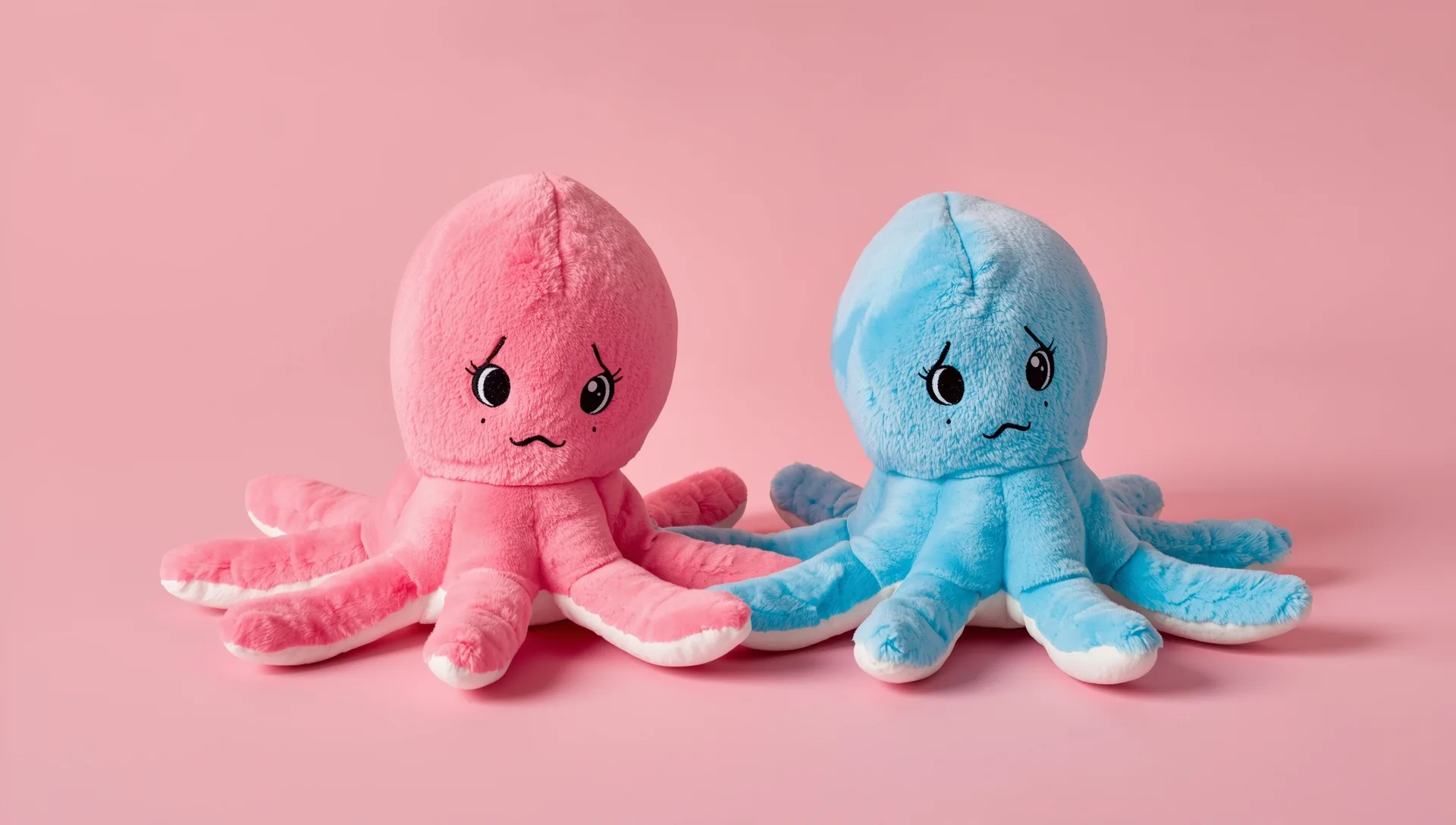
The reversible octopus is a simple mechanism — flip it inside out and a smiling face becomes a scowling one — that turned out to be an accidental communication tool. Kids who can't yet say 'I need space' can park a grumpy octopus on the desk. Couples use them as a joke that's only half a joke. Therapists and teachers picked them up for the same reason: externalizing a mood is easier than announcing one.
The flip has to be effortless or the whole trick fails. A good reversible turns inside out in about a second, with no seams catching, and holds its shape on both faces. Cheap ones fight you halfway through and end up permanently mid-flip, which as a mood statement is confusing for everyone.
Ours flip one-handed, which we tested by having actual grumpy children do it repeatedly. They were thorough.
Giant octopus plushies: measure the bed first
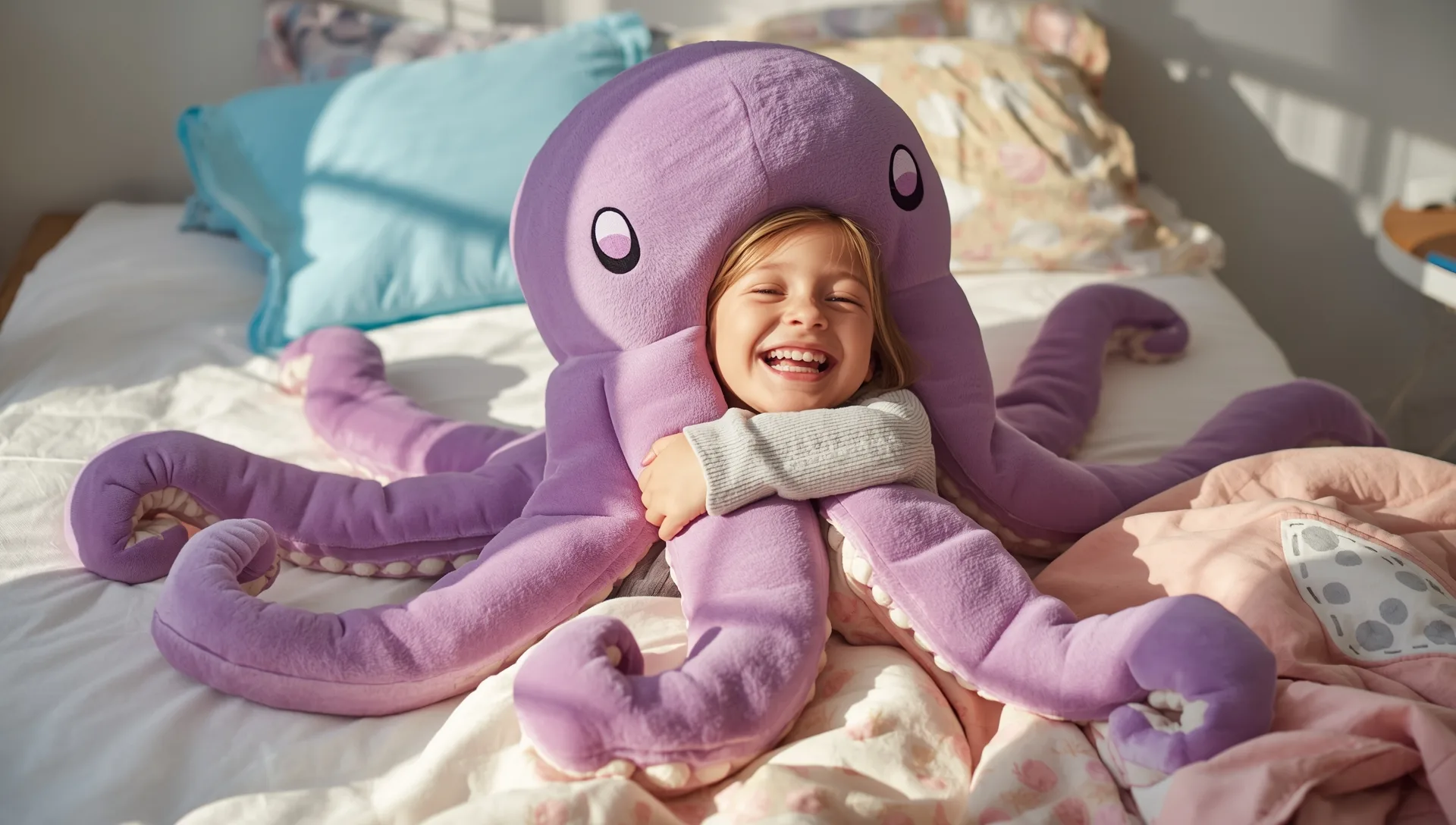
A giant octopus plush — anything with an arm-span near a metre — is a different purchase from a toy. It's furniture that gets hugged. Before ordering one, do the thing nobody does: measure. A one-metre octopus on a ninety-centimetre-wide kid's bed leaves room for approximately zero children.
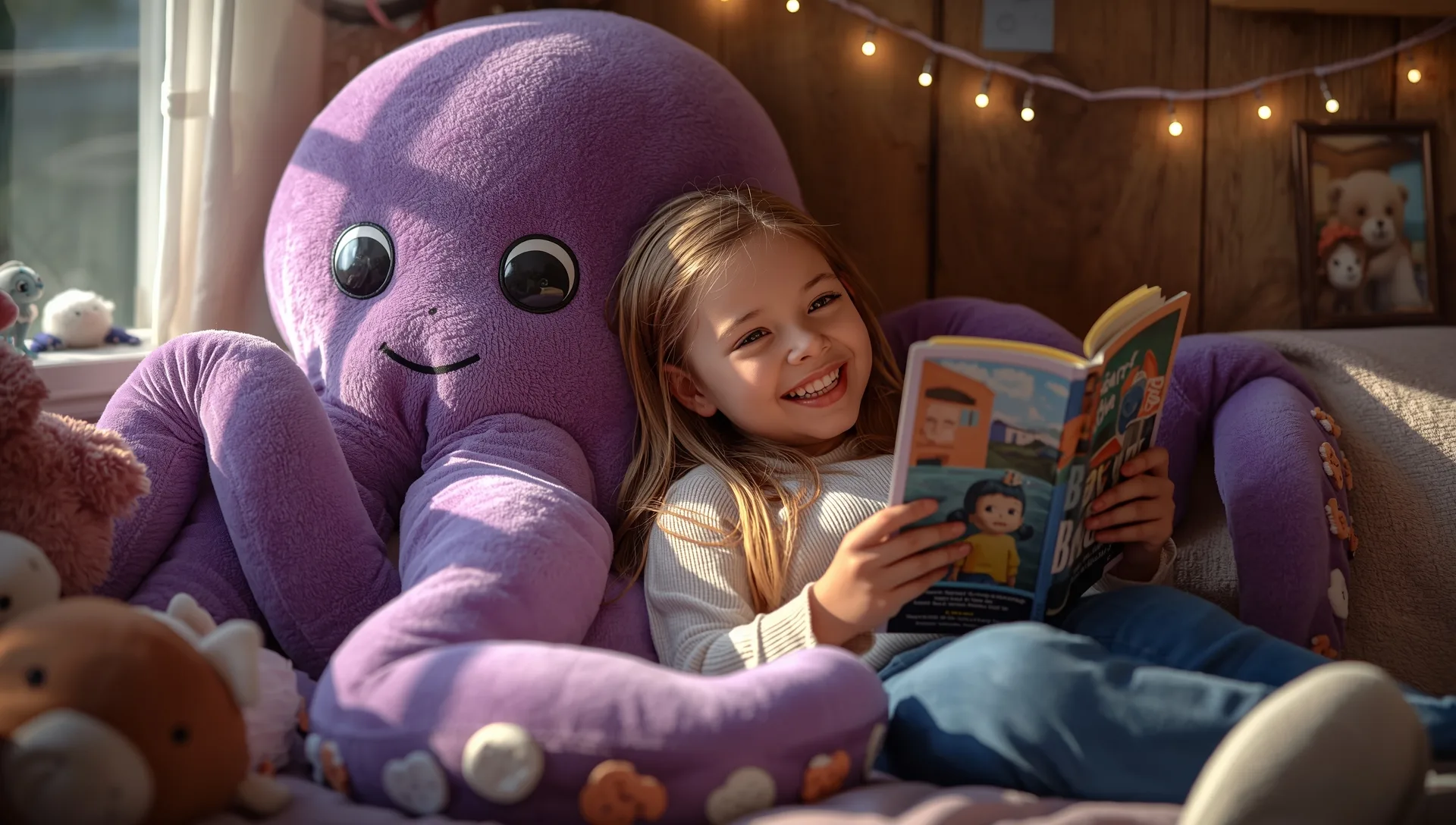
What giant plush does brilliantly: reading-corner anchor, movie-night backrest, the deep-pressure comfort some kids and plenty of adults find genuinely calming. The arms matter here more than the body — eight long weighted-feeling arms drape and wrap in a way a round teddy simply can't. That's the octopus advantage, and it scales with size.
What it does badly: travel, washing machines (see below), and surviving in homes that already have no floor space. If the honest answer is 'we don't have the room,' the sixty-centimetre size delivers most of the hug at half the occupancy.
What's inside: fabric, filling, and the details worth checking
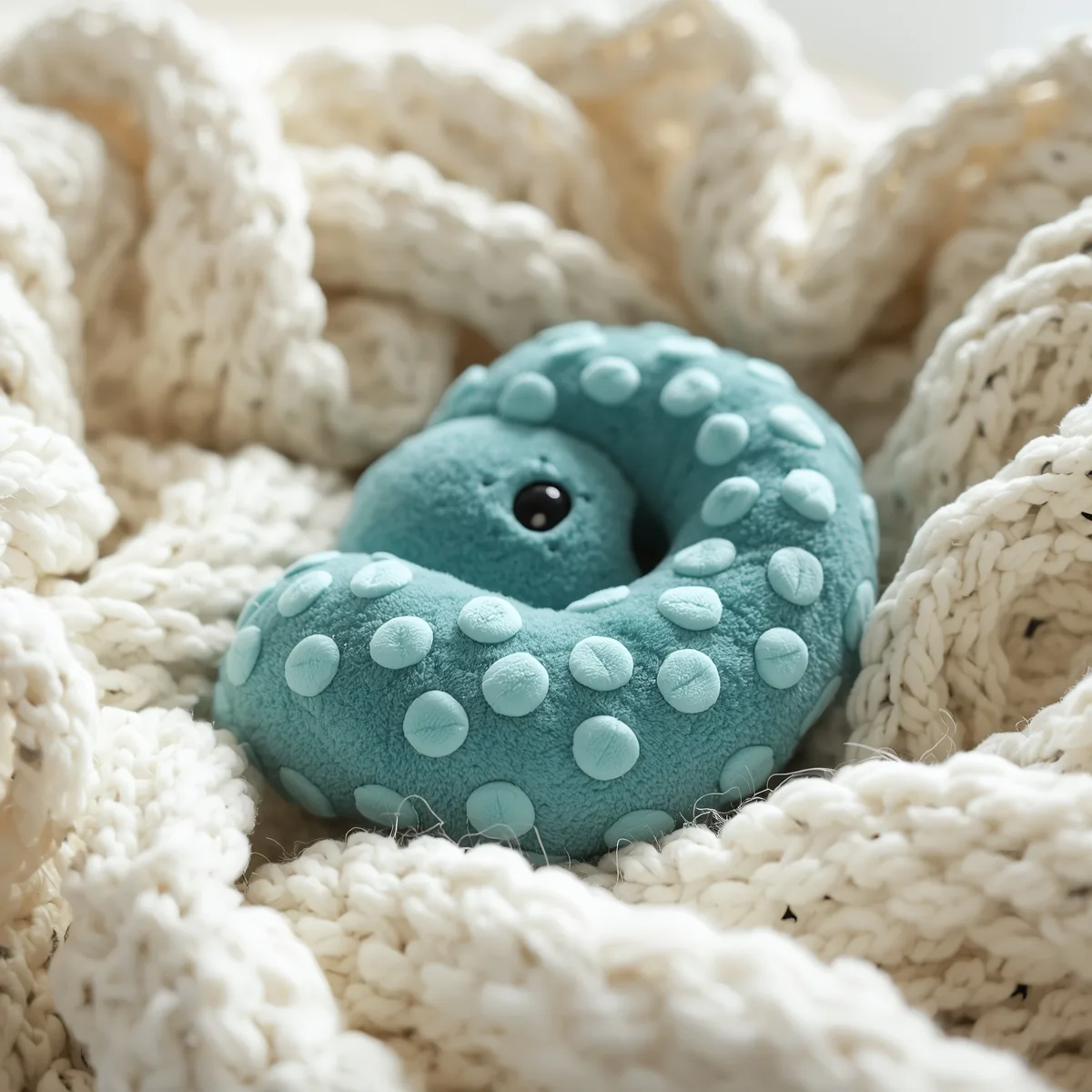
The outer fabric on a plush you'll actually touch daily should be short-pile minky or spandex-backed velvet — soft, dense enough to survive friction, and quick to release hair and dust. Long shaggy pile looks luxurious in photos and mats into dreadlocks by month three.
Filling is polyester fiberfill nearly everywhere, and quality shows in distribution rather than material: arms should be filled to the tip with no hollow ankles, and the body should recover its shape after a full-weight adult flop. Under-filled arms are the number one complaint with bargain octopi — they arrive looking deflated and never recover.
Details worth thirty seconds of inspection when any plush arrives, ours included: embroidered eyes rather than glued plastic (safety and longevity), double-stitched seams at each arm root (the stress point), and a sewn-in label with washing instructions that don't just say 'spot clean' as a legal disclaimer.
Washing an octopus without committing a war crime
Standard and reversible sizes: cold water, gentle cycle, inside a pillowcase or laundry bag, mild detergent, and never — never — the dryer. Polyester pile melts at dryer temperatures and comes out permanently crunchy. Air-dry flat, flip once, done by morning.
Giant plushies don't fit in home machines and shouldn't go in laundromat monsters either; the spin cycle can shear the arm seams under the waterlogged weight. Instead: bathtub, lukewarm water, a small dose of detergent, a gentle press-and-knead like enormous dough, two clean rinses, then press (don't wring) the water out and dry flat on towels near a fan. Budget a full day.
For the weekly maintenance layer, a lint roller and a five-minute sunny windowsill session handle most of what a loved plush accumulates. Sun is a mild disinfectant and completely free.
Timing the wash is its own diplomacy when the octopus has an attached human under six: wash day happens during school hours, never announced, and the plush returns to its exact spot before pickup. A beloved plush that vanishes into a machine in front of its person is a hostage situation; one that's simply fresher by bedtime is a miracle nobody questions.
The safety lines: babies, toddlers, and stuffed animals
The firm line first: no plush in the crib for babies under twelve months — that's standard safe-sleep guidance and no toy is an exception to it. The octopus can supervise from a shelf until the first birthday.
From one to three years, the checklist is embroidered features only (nothing glued that can detach), no bean-style pellet filling in a seam that little fingers could open, and size appropriate to the child — a plush bigger than the toddler is a photo opportunity, not a bedtime companion. All our models pass the embroidered-only rule; the pocket size is deliberately over the small-parts threshold.
Past three, the calculus flips and the plush becomes what it's supposed to be: durable emotional infrastructure. At that point the main hazard is you, stepping on it barefoot in the dark.
A note on the emotional-support role, because it's real and worth designing for: a plush that becomes The One — capital letters, travels everywhere, screamed for at bedtime when missing — should trigger the twin protocol early. Buy the identical backup while it's still in stock, rotate the two weekly so they wear and fade together, and future-you, standing in a hotel parking lot at 9 p.m. with a distraught four-year-old, will regard past-you as a strategic genius. This is the single most repeated piece of advice in our customer email, usually sent in gratitude, occasionally in grief.
Gifting an octopus: a decision tree
For a kid five to twelve: the reversible, no contest. It's a toy, a joke, and a feelings vocabulary in one object, and it survives being loved hard. For a teenager or a stressed adult: the sixty-centimetre huggable — big enough to be funny, soft enough to be sincere, and it reads as deliberately absurd rather than childish, which is exactly the register that age group accepts comfort in.
For a new couple's sofa, dorm rooms, and anyone who has ever sent you an octopus meme: pocket size, because it costs less than lunch and lives on a desk as a small permanent kindness. The giant is a statement gift — birthdays, recoveries, apologies of significance. Nobody forgets who gave them the metre-wide octopus. That's rather the point.
Plush surgery: fixing a loved-to-pieces octopus
A plush that gets loved gets injured — it's the job description — and almost every injury short of dog-related dismemberment is a ten-minute fix. Split seams, the most common casualty, want a ladder stitch: pinch the seam closed, run small stitches that bite alternately into each side, and pull tight so the thread disappears into the fabric. Done properly it's invisible and stronger than the factory seam it replaced.
Deflated arms come back with a chopstick and a bag of fiberfill: open five centimeters of the arm-tip seam, push new stuffing to the very end first, and work backwards toward the body before closing with the same ladder stitch. Resist the urge to overstuff — an arm packed rigid loses the drape that makes octopus arms worth having. You want firm handshake, not baseball bat.
The one repair to refuse: re-attaching anything to a plush owned by a child under three unless it can be embroidered rather than glued or buttoned. A loose safety eye is not a repair job, it's a replacement trigger — and for a genuinely beloved octopus facing genuinely terminal wear, our advice is the time-honored two-plush protocol: buy the identical twin, introduce it during a wash day, and let rotation do quietly what no repair can.
Why the octopus won the plush wars
Teddy bears had a century's head start, so it's worth asking why the octopus keeps gaining shelf space. Part of it is mechanical: eight arms drape over a shoulder, wrap around a waist, and dangle from a bunk bed in ways no rigid-limbed bear can, so the octopus reads as affectionate rather than posed. Whatever it's leaning on, it appears to be hugging. That's not an accident of anatomy; it's the whole design brief.
Part of it is temperament. The real animal comes pre-loaded with charisma — a shape-shifting, jar-opening, aquarium-escaping intelligence that children learn about at exactly the age they're choosing a favorite animal. A plush octopus arrives with stories already attached, and the reversible's two faces only added to the mythology: an animal famous for changing its skin, finally allowed to change its mood.
The Classic Reversible
$16.99
The mood-flipping original in twenty centimetres of double-faced softness: one-second one-handed flip, embroidered faces on both sides, seams built for a childhood of daily reversals.
- Flips inside-out in about a second, one-handed
- Embroidered eyes and mouth on both faces
- Machine washable on gentle, air-dry
- Toddler-safe construction from 12 months
Get the reversibleThe Kraken — 1 m Giant
$74
A metre of arm-span, eight fully-stuffed draping arms, and a body that recovers from a full adult flop. The reading-corner anchor and the gift nobody forgets.
- One-metre arm-span, arms filled to the tips
- Short-pile minky that survives daily friction
- Double-stitched arm roots at every stress point
- Bathtub-washable — full instructions included
Summon the KrakenThings people ask
Do the reversible faces wear out from flipping?
The mechanism is just fabric and a through-hole — there's nothing to wear out except the seams, which is why ours are double-stitched at the flip point. The failure mode on cheap ones is a tight flip tearing the seam; a smooth one-second flip is the sign it'll last.
Can the giant octopus go in a washing machine?
No — waterlogged, it's heavy enough that the spin cycle strains the arm seams. Bathtub, lukewarm water, gentle press-and-knead, two rinses, and a flat dry near a fan. It's a once-or-twice-a-year job; a lint roller handles the weeks between.
Is it safe for my one-year-old?
From twelve months, yes, with the standard rules: embroidered features only (all our models), nothing in the crib before the first birthday, and pick a size smaller than the child. Under twelve months, no plush in the sleep space at all.
How big is the giant, really?
About a metre from arm-tip to arm-tip, with a body around forty centimetres across. It fully occupies an armchair and half of a single bed. Measure the intended landing zone before ordering — we mean it.
My cat/dog has claimed the octopus. Is that a problem?
For the octopus, eventually — pet claws find seams faster than kids do. If it's become a pet bed, let that one go and get the human a fresh one; a shared-custody octopus ends badly for everyone.
Do you do custom colors?
Not yet — we run the classics (and occasional seasonal runs announced by email). Join the list below if you want first pick when a limited color surfaces; they tend to go in days.
First tentacle on new drops
Seasonal colors and limited runs go to the email list a week before the site. One email a month at most — we have plushies to stuff.